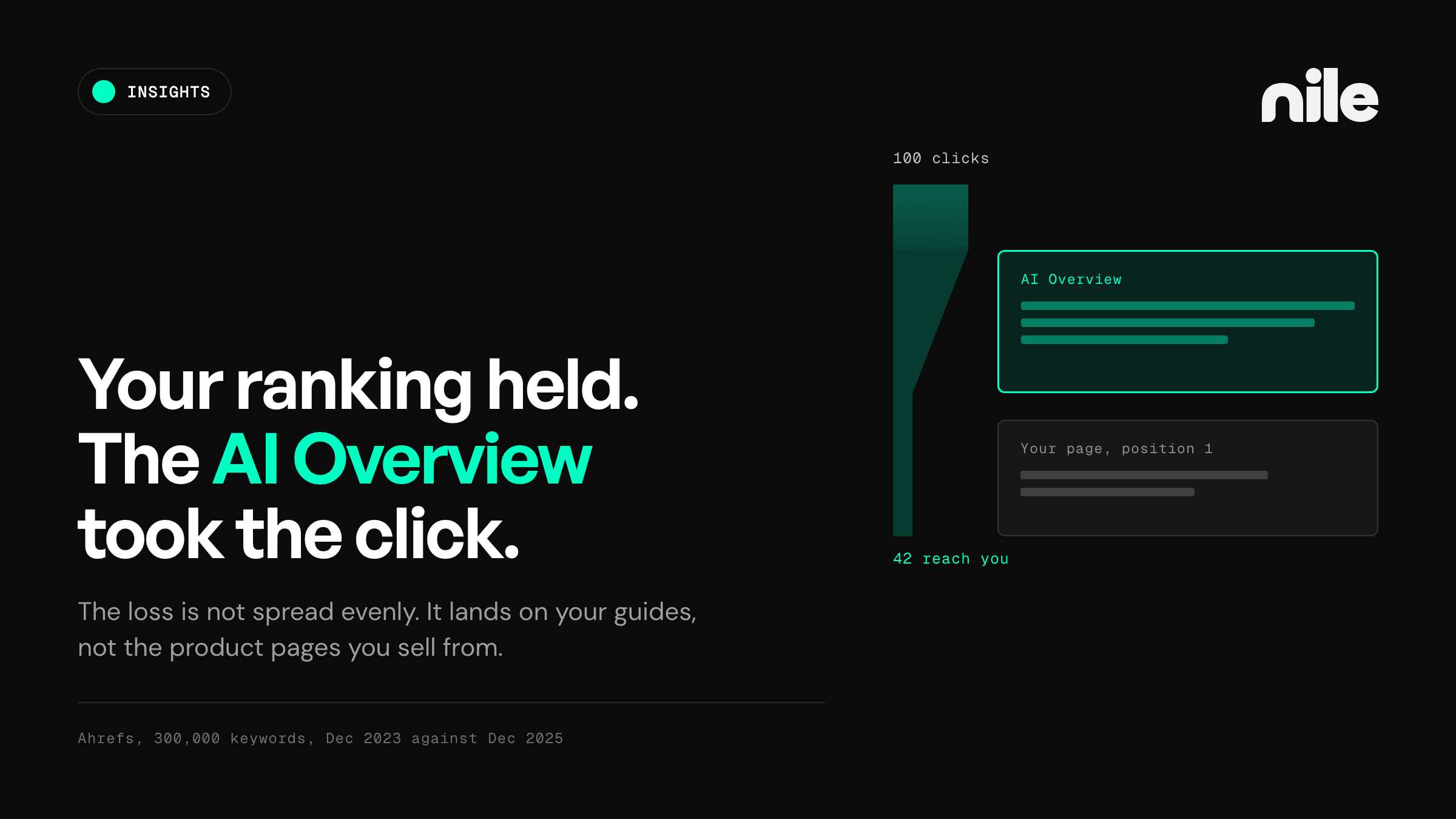

Your GEO report says mentions are up. Your orders are flat.
Both can be true at once, and not because the GEO work was done badly. Product data reaches AI assistants two different ways, by crawl and by feed. They behave differently, different teams own them, and the work most brands are buying only touches part of one of them.
The same split, put as two questions a shopper might ask, answered by two different machines:
"What are the best running shoes for beginners?"
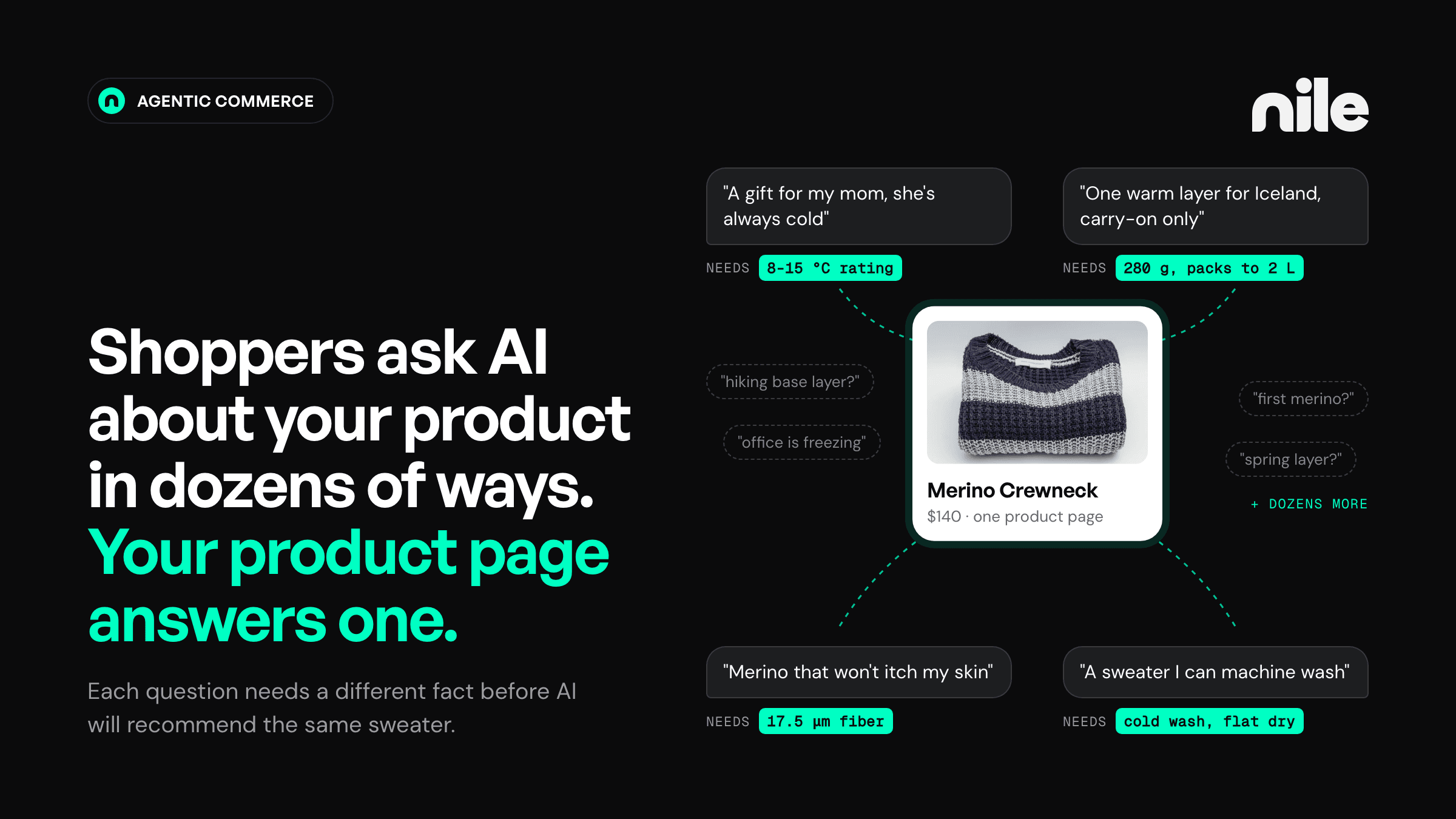
"Wide fit road running shoe under $120, size 11, in stock."
The first gets answered out of text somebody wrote. The second gets answered out of a product record somebody supplied. Generative engine optimization, GEO, the work of getting your brand named correctly inside AI answers, works the first path. Orders come from the second.
One number sets the stakes. Of the ChatGPT product offers that came from a supplied feed, about 99.9% appeared in the first product slot, and the feed's share of retrievals has risen every month. Most offers still come off crawled pages, which is why the window is still open. The rest of this is the mechanism, the evidence, and the parts of the evidence that cut against us.
Where do AI shopping answers come from?
The split that matters is not brand content versus product data. It is how the information physically reaches the answer.
The crawl path. Anything the engine goes out and reads off the open web: your product detail pages (PDPs), and everything written about you elsewhere, from Reddit threads to media reviews to comparison articles. The engine has to find the page, parse it, and infer the fields.
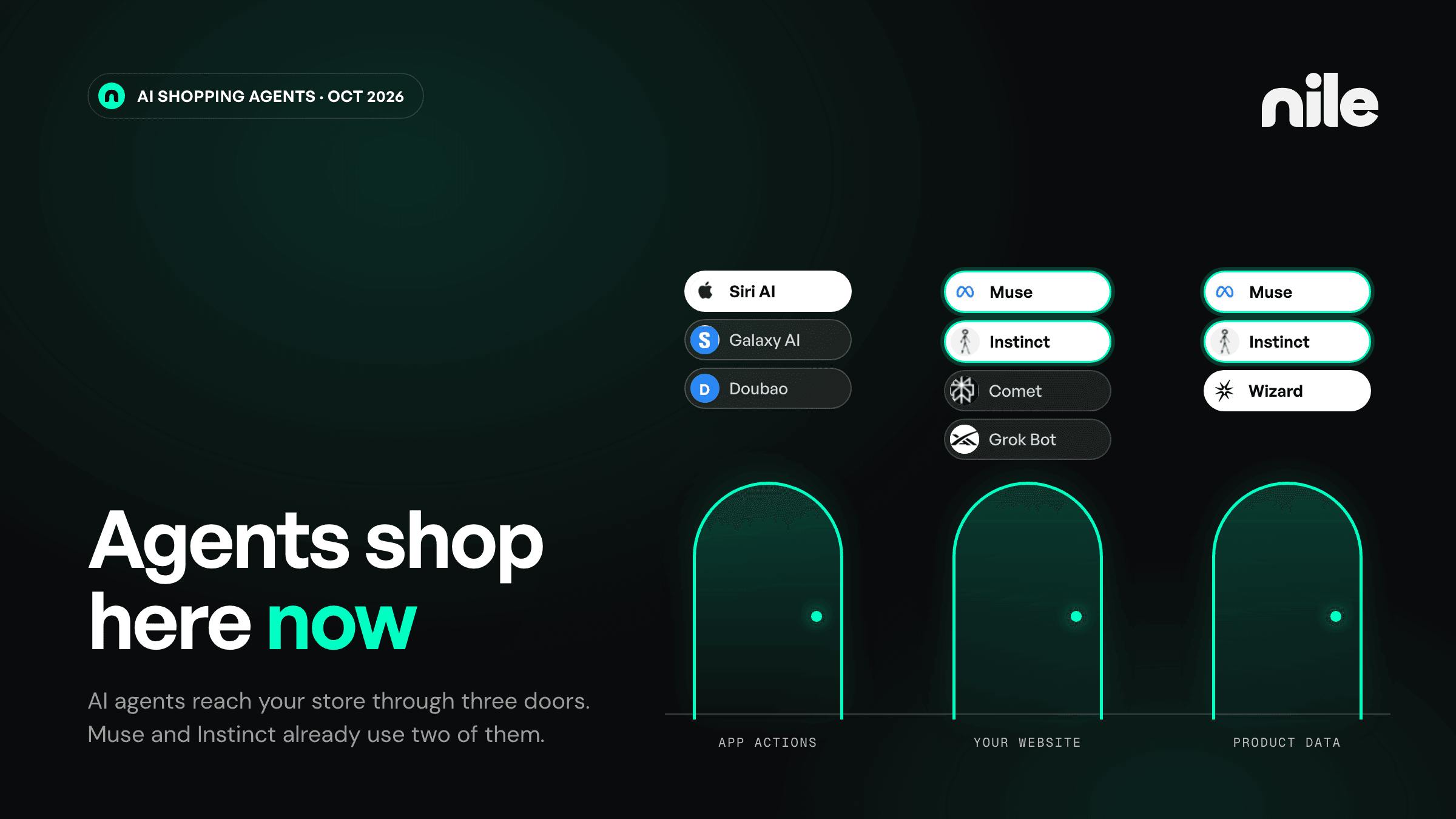
The feed path. Product records, meaning the structured entry behind each product rather than the page in front of it, supplied by you or your platform through the pipes built for exactly that: Shopify's Global Catalog, OpenAI's Agentic Commerce Protocol (ACP), a Universal Commerce Protocol (UCP) endpoint, a Google Merchant Center feed. Nothing is parsed out of prose. Fields arrive as fields.
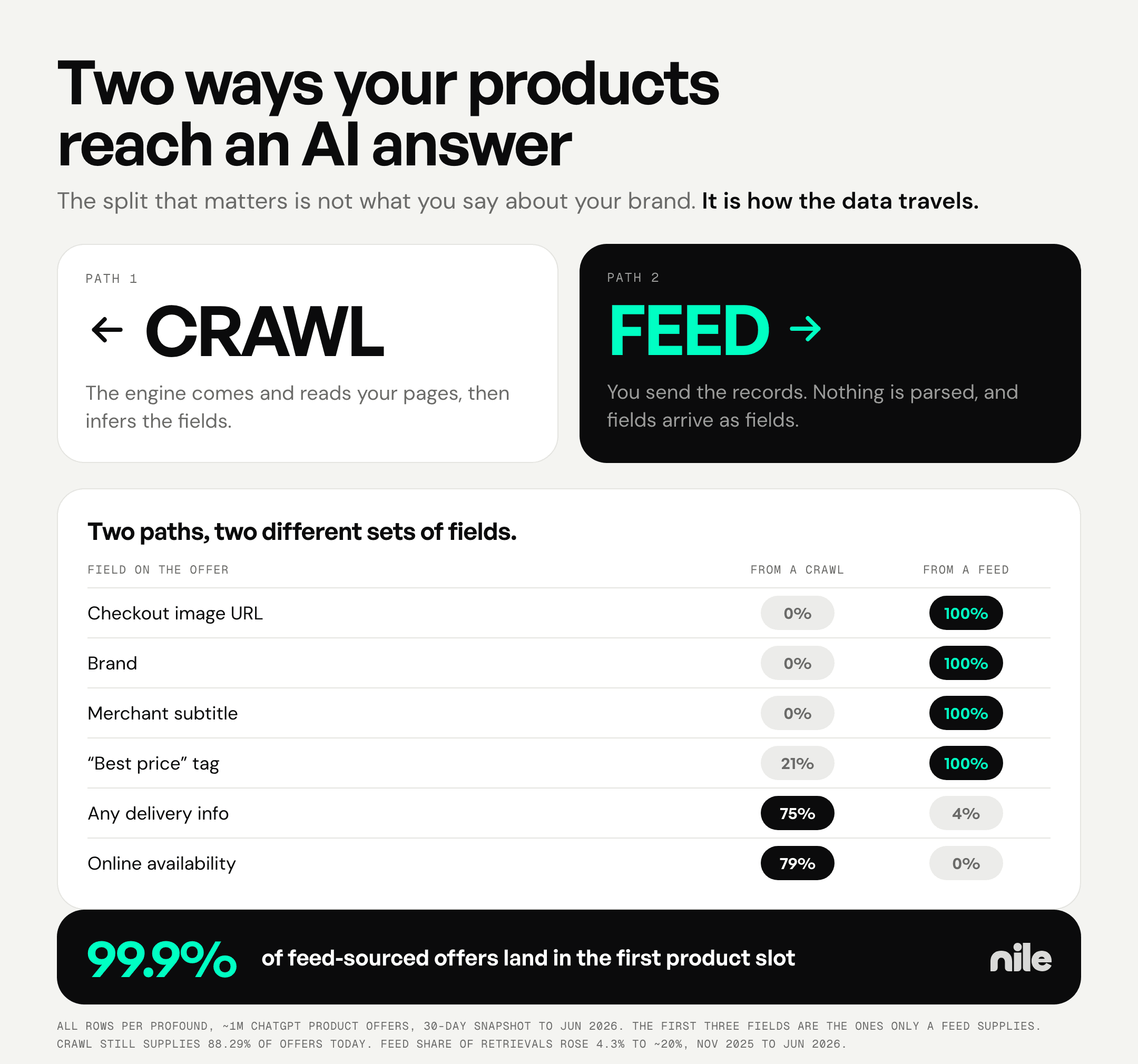
Drawing the line by how the data arrives, rather than by what it is about, matters for one practical reason: it is the same line the available data uses. Profound, an AI search analytics company that tracks how AI assistants retrieve and cite content, published the study most of the numbers below come from, and it classifies every product offer as coming from a web product page or from a product feed.
The crawl path holds two different kinds of material, and different teams own them:
- The editorial slice. Your blog, your brand pages, third-party coverage and discussion. This is what a GEO or AEO engagement works on. AEO, answer engine optimization, is the same work under a different acronym.
- The product page slice. Your PDPs, owned by ecommerce and merchandising rather than by whoever does your GEO.
So you can be doing serious GEO work and still have nobody responsible for how your product pages read to a machine, and nobody at all responsible for the feed.
A shopping question is not routed once. The AI assistant breaks it into steps and retrieves separately for each, so both paths can be used inside a single conversation, with different weights. This is not a clean either/or.
In our experience the stronger the buying intent, the more the answer leans on the feed path, because what the shopper wants is a specific product at a specific price in a specific size. That is our reading rather than a measured finding: the study below has no breakdown by query type.
How much of AI shopping already runs on feeds?
There is now data on exactly this split. Profound's study covers roughly 548 million product offers across ChatGPT shopping sessions from November 2025 through June 2026, plus a 30 day snapshot of about one million offers.
Three numbers from it, in the order that matters.
1. The feed path is growing fast. Feed retrieval went from 4.3% of shopping retrievals in late November 2025 to about 20% by June 2026. A rounding error became a fifth of everything in seven months. And it rose every single month in between, which matters more than the two endpoints do: a line that only goes one way for seven months is a trend, not a wobble.
2. The crawl path is still the bigger share, for now. In the same snapshot, 88.29% of offers came off product pages. That counts what ChatGPT happened to pull, not which route works better, and number 3 explains most of it. Our read, though the study does not prove it, is that crawling is carrying the load because the feed side is mostly still empty. Nobody is shut out of AI shopping for lacking a feed today, and anyone telling you otherwise is overstating the data.
3. Being connected is not the scarce thing. Profound counted 150 unique merchants whose offers arrived by feed, which sounds tiny until you look at how a feed actually happens. The study never says whether that is 150 direct integrations with OpenAI or just the distinct merchants it happened to see. Either way it is not a headcount of the feed path, because on Shopify a feed is not something you go and do: eligible products are included in Shopify Catalog automatically, and you cannot opt out of the catalog itself, only block individual agentic storefronts. Profound found feed-sourced offers leaning heavily on Shopify storefronts, which fits.
So if you sell on a platform, you are probably already in the feed path and have been for a while. That moves the opportunity somewhere less obvious. The scarce thing is not a connected feed. It is a feed whose contents can answer the question being asked, and the next section is what it looks like when that fails.
Why does a feed almost always win first place?
Of all product citations derived from direct product feeds, about 99.9% appear as the first product offer.
That is not a ranking bonus. When the feed is the source, the feed is essentially always in first position.
The reason is not mysterious. Profound looked at field coverage and found three attributes that appear in product feeds at 100% prevalence and in scraped product pages at 0%: the checkout image URL, the brand, and the merchant subtitle. Those are structural slots in a purchasable card, the picture, who makes the thing and who is selling it. A product that cannot fill them cannot be rendered as that kind of card at all, whatever else is true about it.
The same table runs the other way on two rows worth knowing about. Delivery information reached 75% of crawled offers against 4% of feed-sourced ones, and online availability 79% against 0%. Profound's own summary is the accurate one: ChatGPT sees a different set of fields depending on which path it used. The feed is not uniformly richer. It is exclusively richer on the fields a card is built from.
So when people say structured data matters, this is all it means. A buyable card has slots, and three of them were filled by feeds and never by a crawl.
Which is not the same as saying a crawler cannot read your product page. Your page shows a price, and a crawler can often read it. What a crawl does not deliver is the set of fields the card itself is assembled from.
This is a correlation, and part of it is likely an artifact of how the engine assembles a response once a feed source is available. It is also not a promise that connecting a feed puts you first.
You connected a feed. Is it being used?
One line in the study does more work than any of the percentages:
"Even for merchants that have already integrated their product feeds with ChatGPT, 75.81% of offers are still derived from web PDPs."
These merchants did the integration. The pipe is connected. Three quarters of the time, the engine still went and scraped a web page instead.
The reasonable reading is not that the integration failed. It is that the feed could not answer the question that was asked, so retrieval fell back to the open web to find something that could. Which reframes the whole problem:
The question was never whether you are connected. It is whether what you sent can answer what people ask. A feed that is rich and on-target gets used. A feed that is thin, generic or off-target gets bypassed in favor of a scrape, and you are back to competing on the crawl path without knowing it.
Connecting the pipe is a one-time project. Keeping what you send through it able to answer is not a project at all. It is an operating discipline.
Even without a feed, product context decides the order
Now the finding that cost us our favorite simple story, and gave us a better one.
Profound compared 294,913 rank 1 product offers against 657,282 rank 4+ offers. What separated them was how price and value were expressed, the presence of trust signals such as reviews, and whether the title actually stated what the product is for. Descriptive titles beat clever or niche ones.
That comparison is inside the scraped web page path. These are not feed products. They are pages.
So even when the answer is assembled by crawling, what decides the ordering is product level context, not brand level voice.
Put that next to the feed findings and the real shape of this emerges. The two paths are two ways of carrying the same thing, and that thing is what decides the outcome on either one: product context. A feed carries it cleanly and gets rewarded with the first slot. A crawl carries whatever your PDP happens to say, and ranks you on how well that says who the product is for. Neither path rewards adjective density, and neither of them is fixed by more brand-level content.
What GEO does and does not cover
GEO and AEO work the editorial slice of the crawl path. They make it more likely that your brand is named, cited and described correctly when someone asks a question that calls for prose. That is real work, it is worth doing, and nothing in the data above says otherwise.
Where that work stops, or stops short:
- Your product page slice. Some GEO and AEO vendors do reach in here, usually for schema and titles. Fewer treat what the page says about fit and use as a data set, and that is the thing the rank comparison above was measuring. Descriptive titles and trust signals are merchandising decisions before they are content marketing decisions.
- The feed path entirely. No amount of authority on the open web puts a variant, a stock status or a checkout image into Shopify's catalog or a Google Merchant Center feed. A feed is supplied, not crawled.
GEO lives on the editorial slice. That is one of three surfaces standing between a shopper's question and your order, alongside your own product pages and the feed, and it is the furthest of the three from the order.
Diagnosing which surface is your problem is where people go wrong. If you ask a broad category question and see nothing but big brands, that is not a GEO problem, it is recognition and review volume, and content work does not move it quickly. GEO earns its budget on narrower questions, where a comparison article or a review thread in your category is what gets you named at all. And if you are already getting named but never show up as a buyable product, GEO is the wrong budget line entirely.
Two categories dominate the conversation about this, and neither one reaches the feed. Agencies work the editorial slice, and that work is real. AI visibility tools score how often you get named, which is measurement rather than supply. Tooling for the feed side does exist, mostly sold as an integration. But connecting a pipe is a project with an end date and product context is not, so the question that outlasts any vendor choice is who owns it next quarter.
Four gates, not one problem
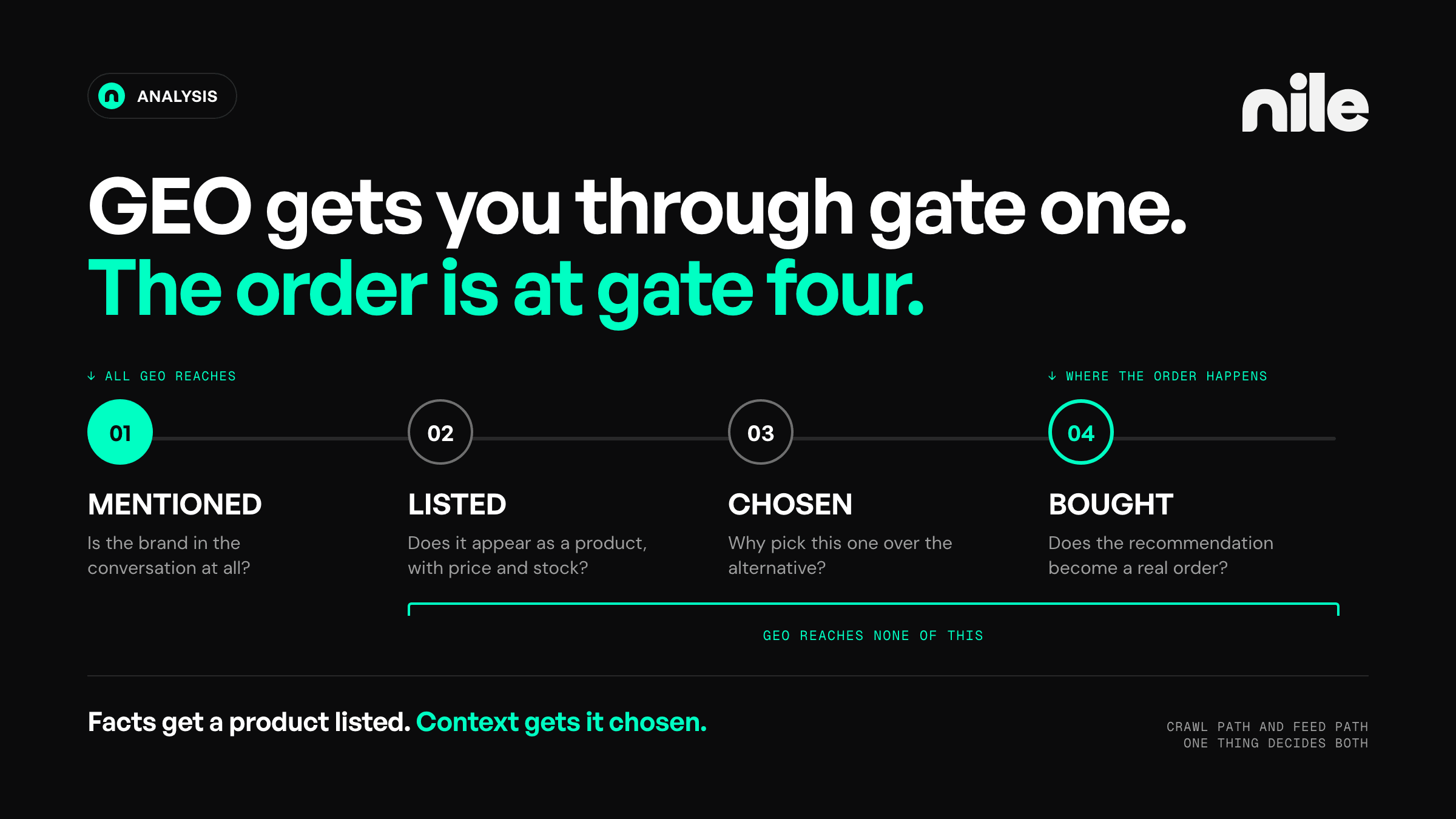
The complaint we hear most often is "AI never sends us anything." That is not one problem. It is four, and only the first one is a content problem.
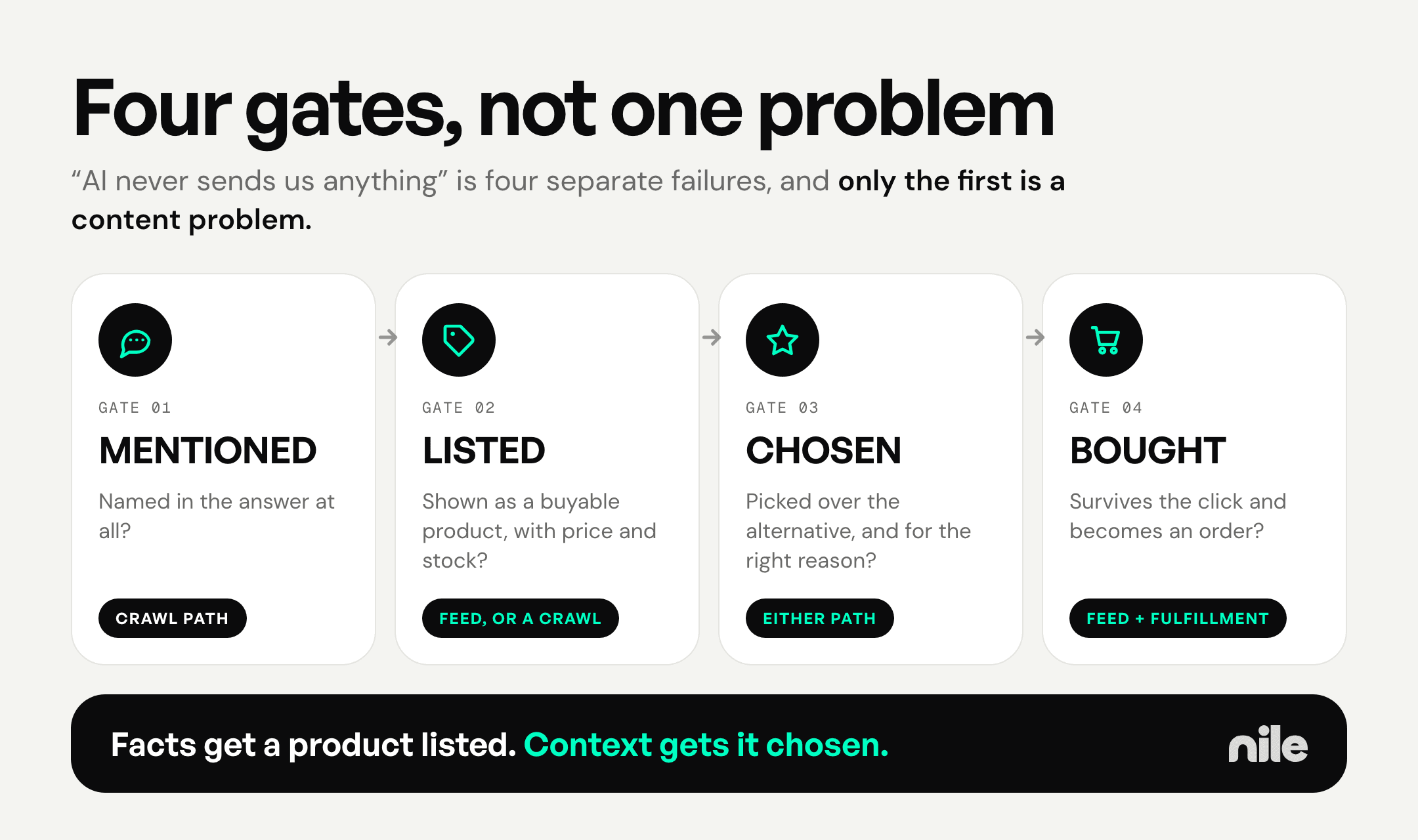
Where each one breaks is different, which is the whole reason to keep them apart:
| Gate | Which path feeds it | What failure looks like |
|---|---|---|
| Mentioned | Crawl, editorial slice | Never named, described wrong, only competitors appear |
| Listed | Feed, or a crawl that can fill a card | Not in the catalog, wrong variants, stale price or availability |
| Chosen | Either, decided by product context | Copy too broad to match a constraint, so the AI assistant guesses |
| Bought | Feed, plus inventory and fulfillment | Price or stock conflict on arrival, checkout failure, fulfillment mismatch |
The paths are not perfectly segregated, and under this kind of split they are not supposed to be. Mentioned is almost purely the editorial slice of the crawl. Listed can be reached either way today, though only the feed path reliably produces a purchasable card. Chosen is decided by product context on whichever path delivered the offer. Only Bought genuinely needs data that is live at the moment of purchase, and on the evidence above neither path is dependable there on its own: a crawled page goes stale, and feed-sourced offers in that snapshot carried availability almost never. The reason to keep the four apart is that they fail for different reasons and get fixed by different teams, so collapsing them into one AI visibility score guarantees you cannot tell which one is broken.
The short version: facts get a product listed, context gets it chosen. Which is also why we think product selection rate and merchant selection rate end up measured separately, the way paid media separated impression share from win rate. That argument deserves its own piece. Until then, the practical half is picking the queries you measure against.
OpenAI runs two selections, not one
Getting your product recommended and getting your store the sale are two different competitions. OpenAI's own shopping documentation says so, in a passage that is easy to skim past.
Selection 1: which product gets chosen? ChatGPT combines the shopper's question and context, including budget, stated preferences, Memory and Custom Instructions, with your structured product data, third-party evidence such as reviews, and its own policy constraints, to build a shortlist that matches the intent. Part of that list is about the shopper and out of your hands. The rest is about how well your product describes itself.
Selection 2: which merchant gets the sale? Click into a product and a second competition starts. If several merchants sell the same item, OpenAI says the ranking can consider:
- availability
- price
- quality
- whether you are the maker or the primary seller
In OpenAI's words, merchants are "ranked based on factors like availability, price, quality, and whether they are the maker or primary seller of that item". The merchant shown first is not necessarily the cheapest one.
These two selections sit inside the four gates rather than beside them. OpenAI's product selection is where Listed and Chosen get decided. Its merchant selection is a second contest that only opens when more than one store sells the same item.
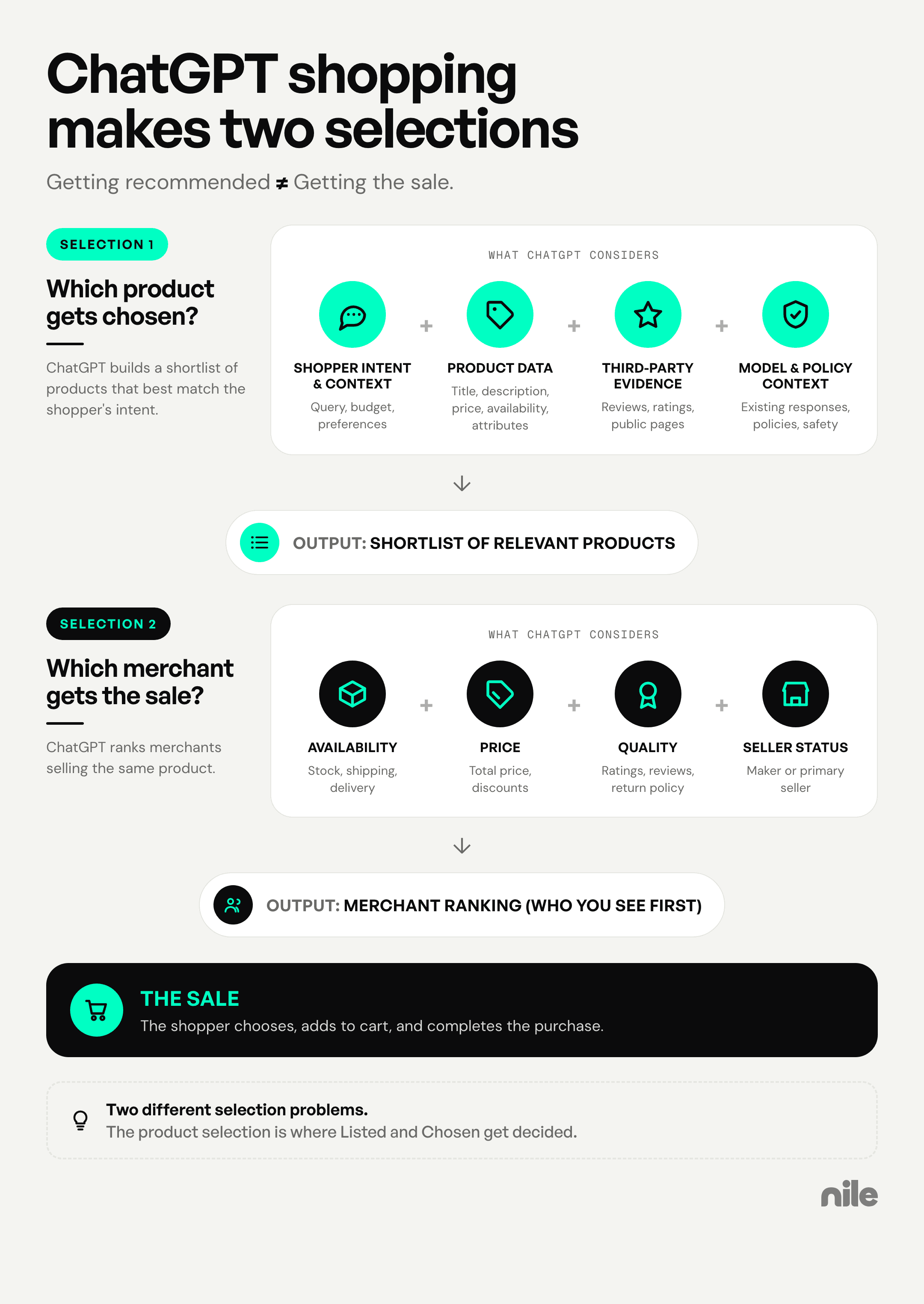
Which selection matters depends on what you sell. The merchant contest mostly fires on items sold by more than one store: resellers, distributors, marketplace overlap. If you are a DTC brand and the only seller of your own product, it barely applies to you, and "maker or primary seller" works in your favor. Your whole fight is in the product selection, which is to say in Listed and Chosen.
Both platforms are also explicit that being in the system is eligibility and nothing more. Shopify, on being included in Shopify Catalog: it "doesn't guarantee that a product will appear in a specific AI answer, be ranked in a specific position, or be displayed by every channel", and "each channel controls the final ranking." OpenAI's commerce documentation makes the same split, between the fields required to display at all and the attributes that improve ranking. Nobody is promising you a placement. The placement is earned after the plumbing.
Where to actually make the change
If you are on an ecommerce platform such as Shopify, there is only one place to make the change. Product data is generally not sent to each AI assistant separately. It is written into the platform's catalog, and the platform distributes from there, so the direct recipient of any change you make is the platform catalog rather than ChatGPT or Gemini. Which means "optimizing separately for each AI platform" is mostly a fiction if you are on a platform. What varies per platform is which fields get used and how, not where you put them.
So the work is not integration work. It is catalog work, and in our practice it has three parts.
Collect the context that is not in your catalog yet. Who the product is for, who it is not for, what it gets used with, what the return policy actually says, what reviewers keep repeating. Most of this already exists somewhere in the business, in support tickets, in reviews, in a founder's head, and almost none of it is in a product record.
Write it in the form the fields expect. Not as more prose in a description block, but as the attributes, variants, availability and media a purchasable card gets assembled from. This is the part that decides whether a feed gets used or bypassed.
Then keep revising it against what actually happened. Which questions surfaced you and which did not, which phrasing the answer picked up. Product context is not a migration you finish. It is a data set somebody owns and keeps current, the way someone in your company already owns inventory.
That loop is what we build for merchants, and we wrote up what it looked like across the first 18 catalogs. The first two parts are the ones you can start without us.
One implementation detail: on Shopify, syncing product data into Google Merchant Center can depend on a store level setting. Having a store on a platform is not the same as having your products in the feed.
What happened when someone fixed only the facts
That line about facts and context is not a slogan. It came out of a test somebody actually ran.
Leo Nguyen of LUMA-E took one merchant's product across four AI surfaces, and all four reported an in-stock item as backordered. One invented a 25% restocking fee against an actual policy of 20%, a number that appears nowhere on the merchant's site. Another misidentified the brand because of conflicting structured markup. After the data was fixed, the accuracy errors went to zero. Category visibility did not move. Fixing the facts made the product listable. It did not get the product chosen.
Which path are you stuck on?
Two minutes, logged out, because your own history will hand you a flattering answer. Pick one product, ask a plain category question, then ask it again with a hard constraint attached: a size, a fit, a price ceiling. Read two things, and do not start by looking for your own name.
- Did any answer list you as a product, with a price and a stock status, rather than naming brands inside a sentence? That is the card question, and it turns on whether the fields a card needs arrived at all.
- Were you there on the plain question and gone once the constraint was added? That is the context question. The engine knows what you sell and not who it suits.
Absent from both is the most likely first result, and on its own it tells you almost nothing, because it covers everything from a data gap to simply being outsized by better-known brands. So narrow the question until you ought to be the obvious answer: your single best product, the one constraint you handle unusually well, and a price.
If you appear on that, the fields are arriving and your ceiling is recognition and breadth, not data. If you still do not appear on a question you should own, two things are worth checking, in this order.
Whether anything is switched off. On Shopify your products are in Shopify Catalog automatically, but individual agentic storefronts can be blocked, so confirm none of yours are.
Whether your product data can answer the question you asked. In your Shopify admin, open Products, pick that product, and then ignore the description box, because almost nothing a machine reads as a value lives in it. The values live in three other places on the same page: the standard product category and the attributes that come with it, your variant options, and any metafields you have set. Now take the three constraints from your question and find each one there. A size or a width belongs in variants or a category attribute. A use case, a material, a compatibility belongs in a category attribute or a metafield. If a constraint exists only as an implication in the description, it did not arrive, and no amount of rewriting that paragraph will change what got sent.
Answers also move between sessions and locations, so one pass is a sample rather than a ranking.
Is it worth the work?
Yes, and the size of it is the part we did not expect. Across more than 500 brands connected to Nile as of August 2026, the pattern we keep seeing is a click conversion lift of 150 to 300 percent against the brand's own site. Not on a handful of accounts. On the network.
One example with the rest of the numbers attached. A health hardware brand saw about 3.6% of its visits from AI surfaces turn into orders, against about 1.8% of site-wide visits, at an average order value over $200. The site did not change. The catalog did.
That order value is the part that surprises people, and it is the reason this is worth budget rather than curiosity. AI surfaces are not sending cheap commodity traffic. They are sending shoppers who arrived with a constraint, found a product that matched it, and bought at full consideration.
Two things about the numbers. The comparison is before and after on the same store rather than against a separate control group, so anything else that changed in that window is not separated out.
The second one runs opposite to the usual disclaimer. Attribution is last click, which is the most conservative model there is: an order only counts if an AI surface was the last touch before checkout. At a few merchants we ran post-purchase surveys asking buyers how they found the product, and AI-influenced orders came back three to five times what last click had credited. Self-reported answers carry their own bias, so read that as a direction rather than a coefficient. But the direction has been consistent, which means the figures above are a floor rather than a ceiling.
The bottom line
Three surfaces decide whether an AI assistant sends you an order: the editorial slice of the crawl, your own product pages, and the feed. GEO works the first one, and works it well. The order gets decided on the other two, and both of them read fields rather than paragraphs.
Three things worth doing regardless of who you work with.
- Run the two-minute test above on one important product, and find out whether your problem is fields or context.
- For your top five products, write down the answers your product data does not have. Who it is for, who it is not for, what it gets used with, what it will not fit. Nobody ever writes the second one, and it is often the one that settles a match.
- Decide who owns product context as a data set, the way someone in your company already owns inventory.
The next thing we want to know is whether high-intent questions pull harder on the feed path than broad ones do. Nobody has published that yet, and it is measurable, so we are measuring it.
Facts get a product listed. Context gets it chosen. If you want that done across a whole catalog rather than five products, connect your store to Nile.
Frequently asked questions
Does GEO help my products get bought through AI assistants?
GEO and AEO work the editorial slice of the crawl path: your blog, your brand pages, and third-party coverage and discussion. That makes it more likely your brand is named and described correctly when a question calls for prose. It does not reach your product pages, where the crawl path decides which product is ordered first, and it does not reach the feed path at all. If nobody names you, GEO is the fix. If you get named and never appear as a buyable product, GEO is the wrong budget line.
Where do AI shopping answers get their product data?
Two paths. The crawl path is anything the engine goes out and reads off the open web, including your product pages and everything written about you elsewhere. The feed path is product records you or your platform supply as structured data, through Shopify's Global Catalog, OpenAI's Agentic Commerce Protocol, a Universal Commerce Protocol endpoint, or a Google Merchant Center feed. In Profound's 30 day snapshot of about one million ChatGPT product offers, 88.29% came from crawled pages.
I already connected a product feed to ChatGPT. Why are my product pages still being scraped?
Profound found that even for merchants who have already integrated their product feeds with ChatGPT, 75.81% of offers are still derived from web product pages. The likely reading is not that the integration failed, but that the feed could not answer the question that was asked, so retrieval fell back to the open web. Connecting the pipe is a one-time project. Keeping what you send through it able to answer the questions people actually ask is an operating discipline.
Do I need to optimize separately for ChatGPT, Gemini and Google?
For merchants on a commerce platform, mostly no. Product data is generally written into the platform's catalog, and the platform distributes from there, so the direct recipient of a change is the platform catalog rather than any individual AI assistant. What varies per platform is which fields get used and how, not where you put them. One implementation detail is real: syncing product data into Google Merchant Center can depend on a store level setting.
How can I tell whether my problem is the crawl path or the feed path?
Pick one product and ask three questions in order, logged out, in both ChatGPT and Gemini: a category question, then a constraint question with price and fit, then a situation question describing the shopper. If you appear on the first and disappear by the third, your facts are readable and your context is not. If products are listed with price and availability and stores your size appear but you do not, that is usually a data gap rather than a recognition gap. One pass is a sample, not a ranking.
Sources
- What ChatGPT actually looks for and how to get your products cited higher in AI Shopping — Profound (accessed 2026-08-27)
- Shopping with ChatGPT search — OpenAI (accessed 2026-08-27)
- Commerce key concepts: required fields and recommended attributes — OpenAI (accessed 2026-08-27)
- Shopify Catalog — Shopify (accessed 2026-08-27)
- Four AI Agents Said an In-Stock Product Was Backordered — Nile (accessed 2026-08-27)
- Product details and the standard product taxonomy — Shopify (accessed 2026-08-28)