
For twenty years, Google owned the moment before purchase. A shopper searched “best carry-on luggage” or “protein powder for sensitive stomach,” and Google decided which ads, listings, and merchant pages appeared next.
AI changes that interface. Shoppers increasingly want an answer, not ten blue links: an answer that compares products, explains tradeoffs, checks availability, and helps them buy.
That is the pressure behind Google’s agentic commerce push. Google is not abandoning search commerce. It is trying to preserve it after search becomes conversational. Here is what that means for your brand.
1. Google’s new commerce stack
The clearest signal is the Universal Commerce Protocol, or UCP. Google describes UCP as an open standard designed to turn AI interactions into instant sales, enabling agentic actions in AI Mode and Gemini starting with direct buying.
The idea is straightforward: if AI surfaces are going to recommend and transact, they need a standard way to understand your products, checkout options, fulfillment constraints, order updates, and post-purchase flows.
Google announced UCP alongside tools for retailers and platforms, positioning it as a way to connect with high-intent shoppers in an AI shopping era, and co-developed it with Shopify, Etsy, Wayfair, Target, and Walmart. And Google already has the ingredients: Search, Gemini, Merchant Center, Shopping Graph, product feeds, ads, payments partnerships, and Android. UCP is the attempt to make those pieces work in an agentic environment.
2. Why this is different from Google Shopping
The old model was feed-driven and click-driven. You uploaded product data, Google matched it against search intent, the shopper clicked out to your site, and Google monetized the attention through ads.
Agentic commerce changes the sequence. When a user asks AI Mode to find a product, the system interprets the shopper’s situation, narrows the options, explains why one product fits, and potentially initiates a purchase.
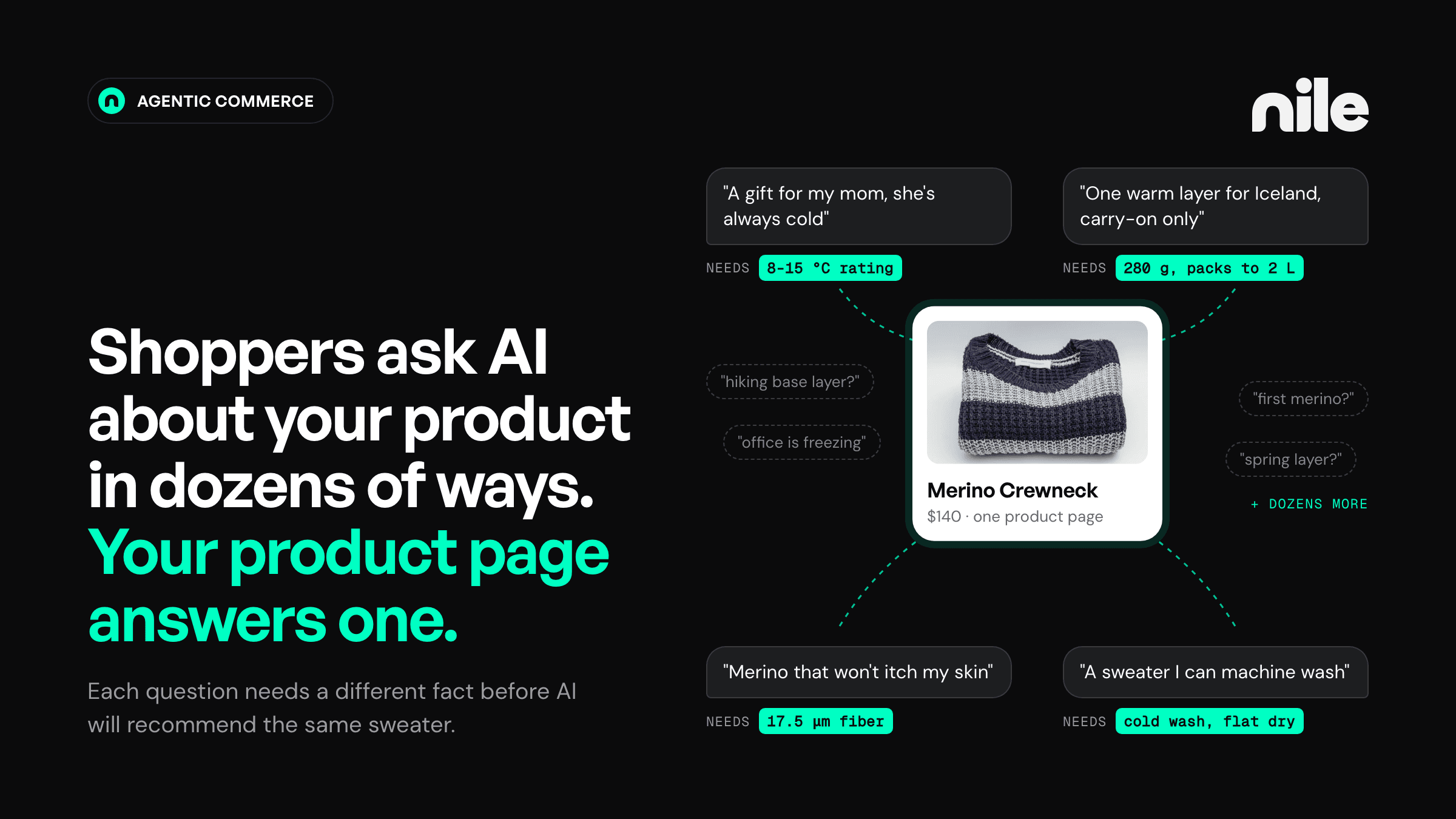
That requires better product context. A feed with title, price, image, and availability is not enough. The AI needs attributes, variants, policies, delivery constraints, compatibility, size guidance, and confidence that the information is current. Google's developer materials describe UCP as enabling agentic actions on AI Mode and Gemini, beginning with direct buying.
The real shift: Google is standardizing the pipes between your catalog and AI agents.
3. The strategic logic
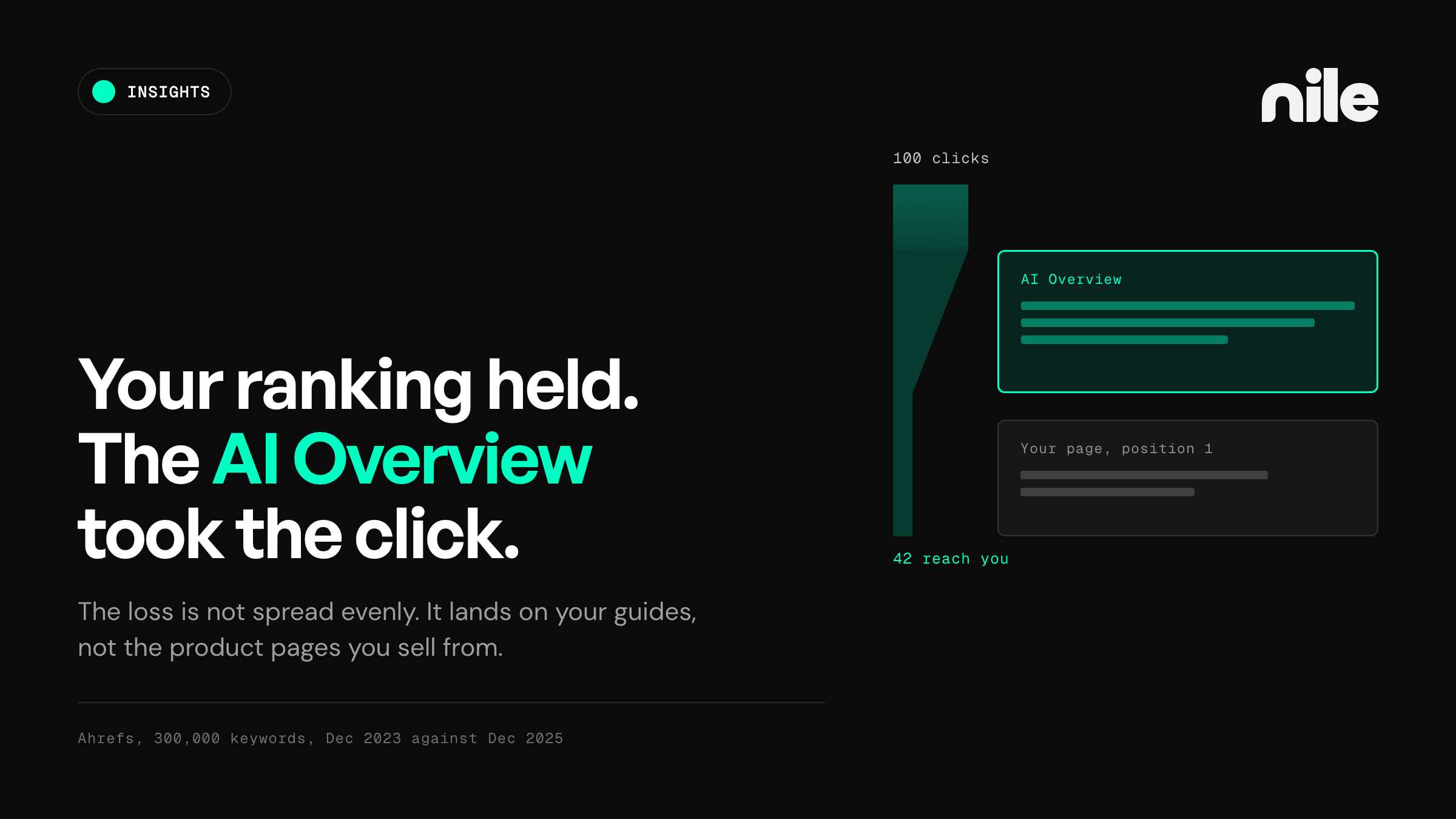
Google’s biggest risk is not that shopping disappears. It is that the commercial query moves somewhere else. If a shopper asks ChatGPT, Perplexity, TikTok, or a personal agent to choose a product, Google loses the starting point, where commercial value has historically concentrated.
Google has to make AI search commercially useful before it threatens the ad business. UCP lets merchants and platforms plug into a shared standard, so AI Mode and Gemini become shopping environments without Google owning every merchant relationship from scratch. It also extends Google from traffic broker to transaction enabler.
4. What to watch
- Product data requirements. If Google’s AI surfaces matter more, your product information has to be cleaner and richer than traditional SEO or feed optimization required.
- Eligibility. Not every merchant or product appears in every agentic surface immediately. Early access, onboarding, and technical readiness matter.
- Checkout path. Google’s UCP documentation starts with direct buying, but the broader market includes merchant-owned checkout, platform-facilitated checkout, and hybrid handoff flows.
- Attribution. If AI Mode influences the decision but the purchase completes elsewhere, you need a clear view of what Google drove (the ROI framework covers the metrics). This is still underdeveloped across the whole market; agentic commerce becomes a serious channel only when you can measure it.
5. Where Nile fits
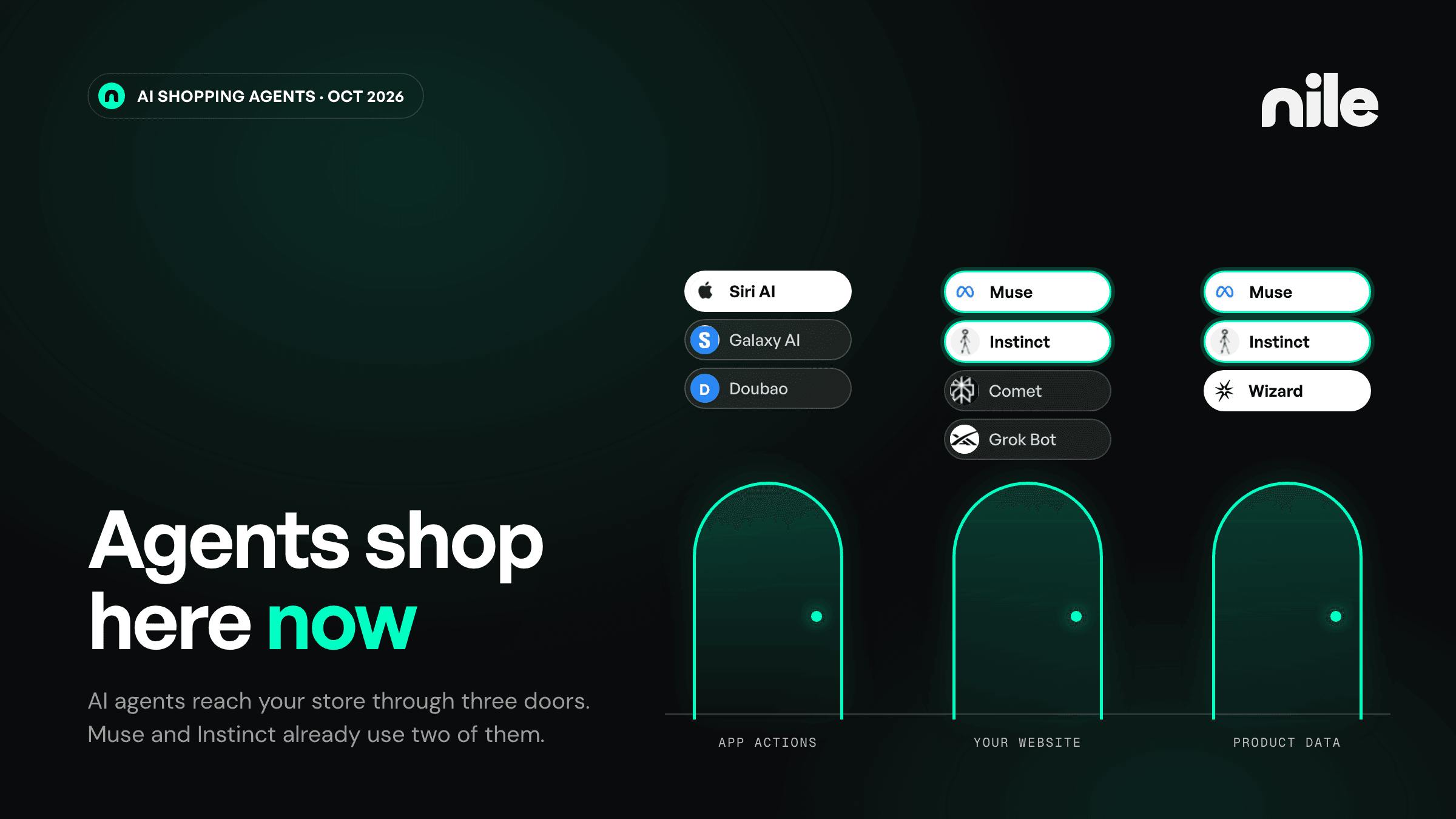
Google's move makes one thing obvious: whether AI agents can understand and recommend your products now decides your distribution.
Google is one surface where that decision happens, and the platform map covers the rest. Nile makes sure your brand holds up across all of them. Nile builds your brand agent: your brand, represented on every AI. You connect your catalog once, Nile turns it into an agent-ready representation of your products, and orders flow through your existing setup. No setup fee, no ad spend: you pay only when you sell.
What to do now:
- Audit your top products against what an agent needs: attributes, variants, policies, delivery constraints, compatibility, current availability.
- Track Google's UCP merchant requirements and onboarding criteria as they publish them.
- Set up attribution for AI-driven sessions before the volume arrives, not after.
- Get your brand represented early. Early brands compound, and Nile costs nothing until you sell.