
Amazon’s agentic commerce strategy is defensive: make sure AI agents do not sit above the marketplace and reduce Amazon to one option among many.
Amazon already owns one of the most valuable shopping habits in the world. Consumers go to Amazon when they know what they want, when they want fast delivery, and when they trust the marketplace more than the brand. Google and OpenAI are turning AI interfaces into shopping surfaces. Shopify is making merchant inventory available to agents. Amazon is protecting the habit.
1. Buy for Me: Amazon reaches outside Amazon
Amazon introduced Buy for Me as a beta feature in the Amazon Shopping app. The feature helps customers discover and purchase select products from other brands' sites when those items are not currently sold in Amazon's store.
Historically, if Amazon did not carry a product, the shopper left Amazon. Buy for Me keeps the user inside the app, shows an external product, and helps complete the purchase from the brand’s site.
The Verge reported that the feature lets users purchase products from third-party websites without leaving Amazon's mobile app, with payment and shipping details securely encrypted; customer service and returns are handled by the third-party websites, and brands can opt out.
That is not a marketplace in the traditional sense. It is closer to an agent acting on behalf of the shopper while Amazon controls the interface.
2. Why Amazon would do this
Because the bigger risk is that someone else becomes the universal shopping agent. If ChatGPT, Perplexity, or Google can compare products across the open web and help users buy from anywhere, Amazon’s marketplace becomes less central. The user’s first stop is no longer Amazon; Amazon becomes one supplier in an agent’s result set.
Buy for Me is the answer: if the shopper wants something outside Amazon, Amazon still mediates the purchase. That preserves the habit, keeps the shopper inside Amazon’s interface, extends perceived selection beyond Amazon’s catalog, and gives Amazon’s AI systems a way to learn about demand outside the marketplace, including demand for your products.
3. The control fight
Amazon’s fight with Perplexity shows the harder edge of agentic commerce.
Reuters reported that Amazon sued Perplexity over an agentic shopping tool, alleging that Perplexity's system unlawfully accessed Amazon customer accounts and disguised automated browsing as human activity. Perplexity denied wrongdoing and argued that Amazon was trying to restrict consumer choice and protect its ad-driven model. A federal judge later temporarily blocked Perplexity's AI shopping tool from using Amazon's platform, and the case is continuing.
The fight is bigger than these two companies. It raises the central governance question of agentic commerce: when does an AI agent act as the user, and when does it become an unauthorized automated actor? Platforms will set rules. They will protect their interfaces, ads, data, and customer relationships. Agentic commerce will not be a fully open free-for-all: it gets negotiated platform by platform.
4. What this means for your brand
Buy for Me cuts both ways.
Amazon could become a source of demand even for products you never listed in its marketplace. That sounds attractive. But it also means Amazon intermediates your site experience, summarizes your product data, and inserts itself into a purchase flow you normally control.
Then there is attribution. If Amazon helps a user buy from your site, how is that traffic identified? What do you see? How much control do you keep over presentation, pricing, the post-purchase relationship, and support expectations?
Amazon is both a growth channel and a control risk. Agentic commerce sharpens that tension.
5. Where Nile fits
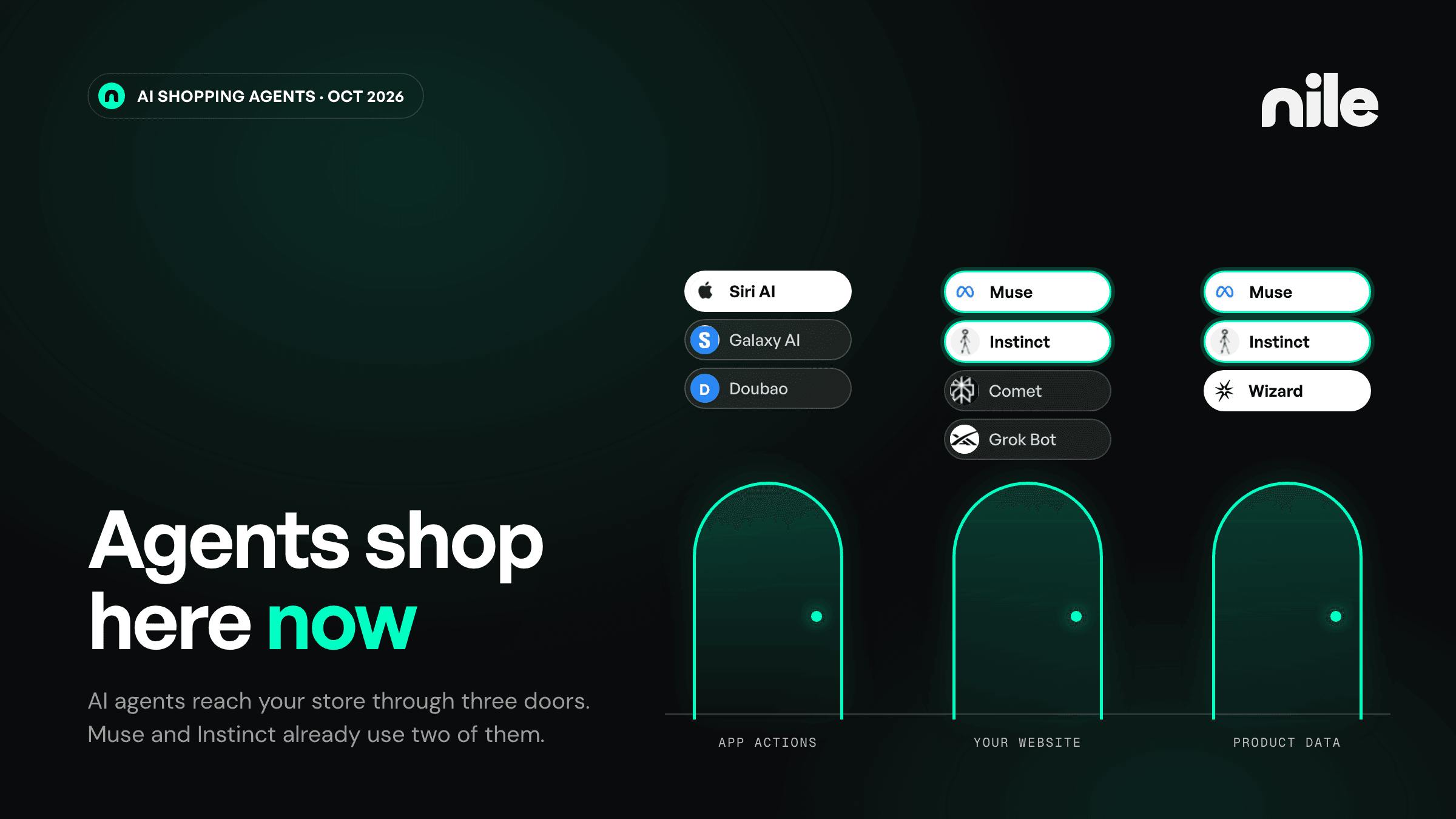
Platforms build agents in their own interests, as the platform map lays out across the market. Amazon's agent preserves Amazon's position. Google's preserves its search commerce role. OpenAI's preserves ChatGPT's discovery role. None of them is neutral toward your brand.
That does not mean avoiding these platforms; they are too important. It means also investing in representation that works for you. Nile builds your brand agent: your brand, represented on every AI. You connect your catalog once, Nile turns it into an agent-ready representation of your products, and orders flow through your existing setup. No setup fee, no ad spend: you pay only when you sell. Your products show up the way you shaped them, and every order is one you can see and attribute.
6. What to do now
- Decide your Buy for Me stance: check whether your products surface there, and whether opting out fits your channel strategy.
- Follow the Amazon–Perplexity case. Its outcome shapes what third-party agents can do on every platform, including your own site.
- Tighten the product data on your own site. Agents read it now whether or not you invited them, and the merchant blueprint covers what they look for.
- Add a channel where agents buy on merchant terms. Nile lists selected merchants, and early brands compound.