
Commerce is moving from a navigation model to an intent-matching model, and that changes what it means for your products to be discoverable.
The search-click-compare-checkout sequence is not going away. But a new layer is emerging beside it: AI systems that interpret what a shopper is trying to accomplish, evaluate products against it, and increasingly participate in the path from discovery to purchase.
The shift is not that consumers will "shop with chatbots." That framing is too narrow. The real shift is in the demand signal itself.
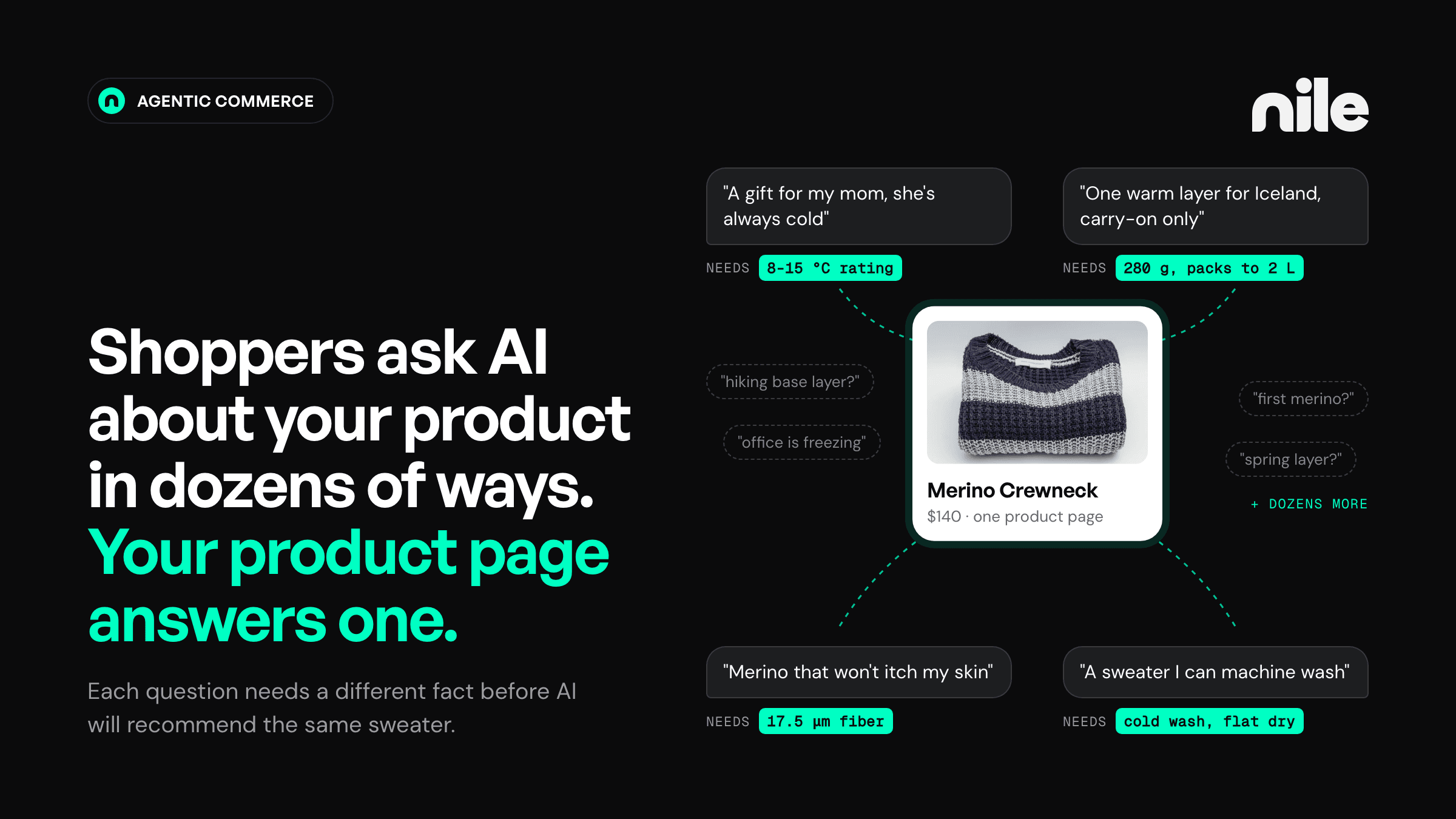
A search query says: "carry-on suitcase."
An agentic request says: "Find a carry-on under $250 that fits European airline rules, arrives before Friday, and has a flexible return policy."
The second request carries far more commercial context: use case, budget, timing, constraints, risk tolerance. An AI system can act on all of it at once.
1. The old model made the shopper do the work
Traditional e-commerce assumes the consumer does most of the interpretive work. You publish a product page. Platforms rank or recommend it. Ads bring shoppers into the funnel. The shopper compares alternatives, reads reviews, checks shipping, evaluates return policies, and decides.
This model created enormous value: global ecommerce reached 20.5% of worldwide retail sales in 2025, per EMARKETER. But it also created friction. The modern shopper is overexposed to options and under-supported in decision-making: thousands of visible products, and still a manual job to figure out which one fits.
That is the gap agentic commerce addresses.
2. The new model is already showing up in the numbers
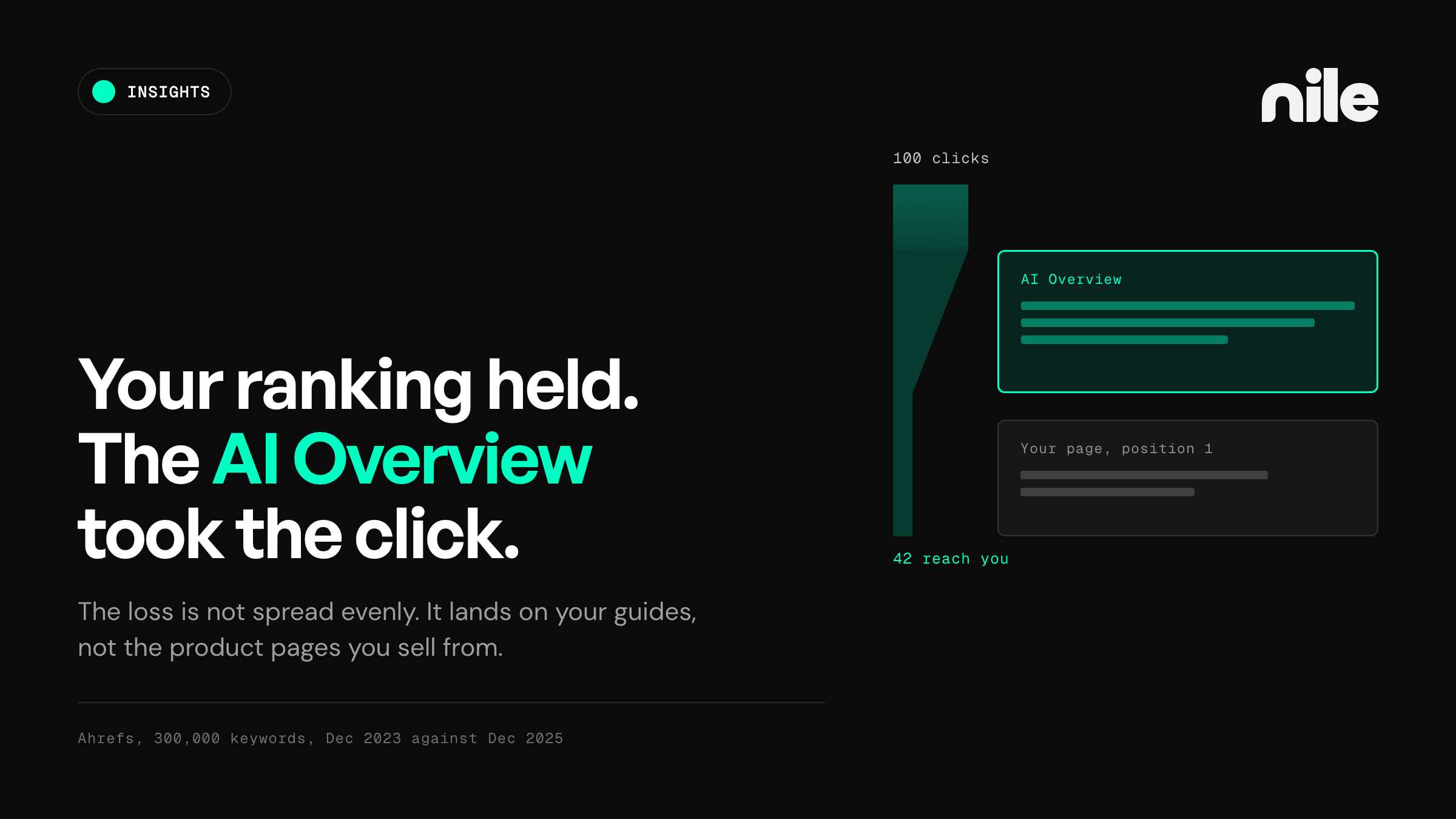
Adobe reported that traffic from generative AI sources to US retail websites grew 4,700% year over year in July 2025, with strong growth earlier in the year as well. The absolute share is still small, but the direction matters.
Bain describes a change at the top of the retail funnel, where third-party agents threaten to disintermediate retailers most. Its research with Similarweb puts AI at up to 25% of referral traffic for some retailers, while still under 1% of their total traffic.
That pattern is typical of early interface shifts: small share, high strategic signal. Read together, the market signals are already measurable.
3. Why now
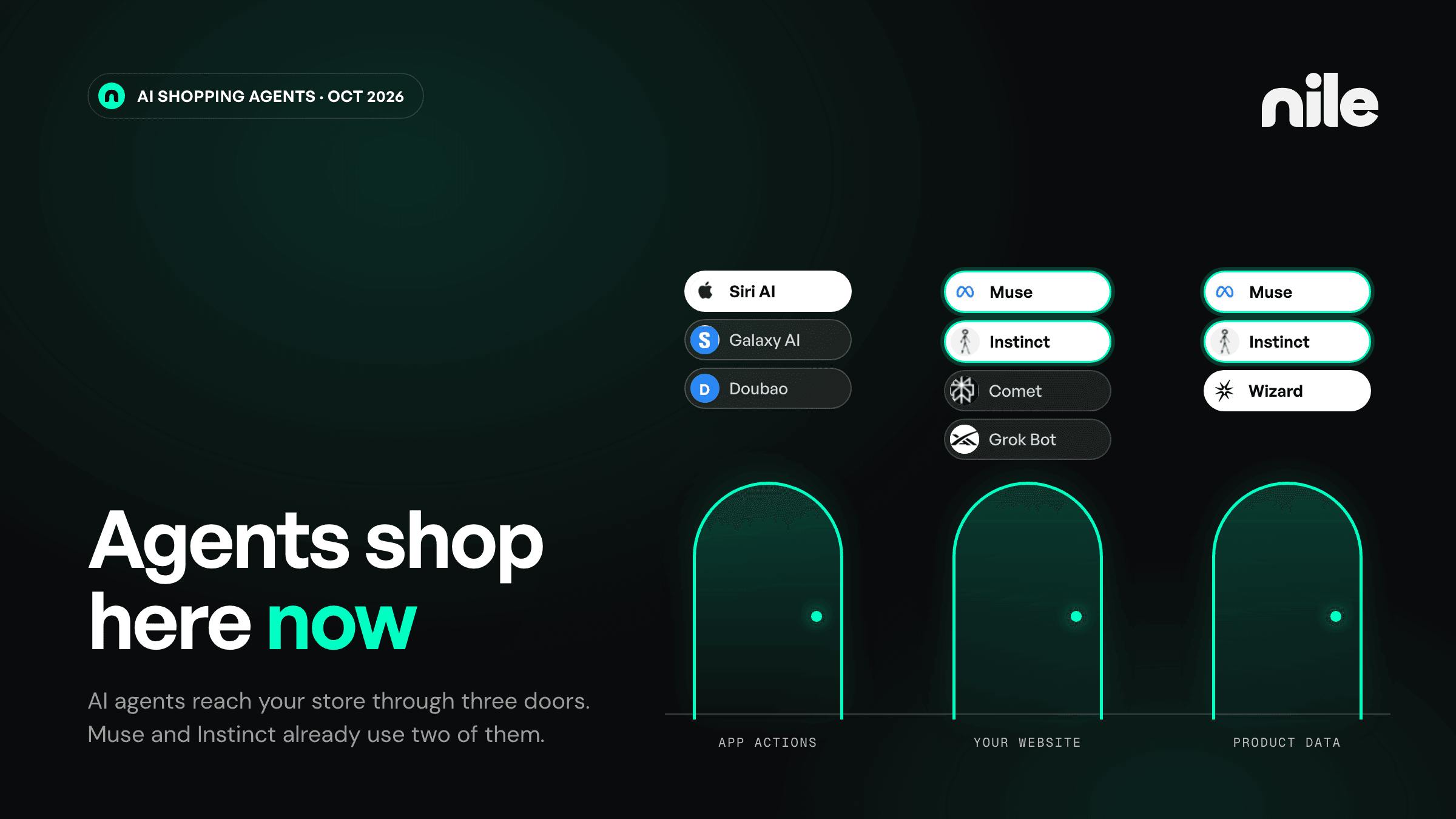
Several parts of the ecosystem are moving at once: consumer AI adoption, measurable AI shopping traffic, platform protocols, payment rails.
OpenAI and Stripe introduced the Agentic Commerce Protocol to let AI agents and businesses complete purchases for users; Stripe describes it as an open standard the two companies co-developed. Google introduced the Universal Commerce Protocol and a Universal Cart as a foundation for agentic shopping and checkout. Visa positioned Intelligent Commerce around secure agent-initiated payments.
Fully autonomous shopping is not arriving overnight: most shoppers still want control, review, and confirmation. But the rails are moving from concept to implementation.
4. What changes for your brand
Your challenge is no longer only to win the click. Your products now get evaluated by systems before the shopper ever reaches a product page.
That requires product data that is complete and structured, which is the readiness work in the merchant blueprint. Inventory and availability that are reliable. Policies that are clear. Claims that are supported. Trust signals that are visible. Product content that holds up across search, ads, product cards, conversational interfaces, and agentic checkout surfaces.
This is not just an SEO problem, an advertising problem, or a checkout problem. It is a question of whether your product truth, shopper context, channel distribution, and performance feedback connect. The operating-model comparison lays out what changes field by field.
5. Where Nile fits
Nile builds your brand agent: your brand, represented on every AI. You connect your catalog once, Nile turns it into an agent-ready representation of your products, and orders flow through your existing setup. No setup fee, no ad spend: you pay only when you sell.
The goal is not to replace your storefront, search channels, or ad platforms. It is to make sure your brand is represented well in a world where commerce increasingly begins with intent and context, not keywords and clicks.
What to do now
The next generation of online retail will not be defined by who buys the most traffic. It will be defined by which products can be understood, trusted, and selected in AI-mediated decision environments. Start here:
- Rewrite one bestseller's product data as if an agent were the reader: structured attributes, use cases, constraints it solves, policies stated plainly.
- Verify your availability, pricing, and return policy data are accurate everywhere they are published: agents punish stale data harder than shoppers do.
- Segment AI-referred traffic in your analytics now, so you have a baseline before the channel scales.
- Pick one agentic channel to test this quarter and measure orders, not impressions. Measure it at gross profit, not sessions.
If you want your brand represented well while that channel forms, start here. Nile builds your brand agent: your brand, represented on every AI. No setup fee, no ad spend, and you pay only when you sell.