
ChatGPT is not the next Amazon, and it is not just another search box. It is a high-intent conversational surface where users already ask for recommendations, comparisons, and decisions, and commerce follows that behavior naturally.
The question for your brand is not whether ChatGPT becomes a marketplace. It is how much shopping intent it influences before the shopper ever reaches your site.
1. Product discovery first, checkout second
OpenAI made its most visible commerce move with Instant Checkout and the Agentic Commerce Protocol. In the initial version, ChatGPT could send order details to a merchant backend through ACP, while the merchant accepted or declined the order, processed payment through its existing provider, and handled fulfillment and support. Stripe, which co-developed ACP with OpenAI, described the protocol as an open standard to help businesses operate in agentic commerce.
That was the flashy version: buy inside chat.
OpenAI's merchant-facing page is more interesting. It leads with product discovery in ChatGPT and merchant-owned checkout: merchants "control checkout, payments, and fulfillment," shoppers are sent to the merchant's own site or app by default, and OpenAI charges no fee on purchases completed there. Users discover and evaluate products in ChatGPT; the purchase completes on your site.
The strategy is less “own checkout” and more “own product discovery and decision support.” For your brand, that may be just as important.
2. The new discovery reality
Product research used to spread across Google, Reddit, TikTok, Amazon reviews, YouTube comparisons, and friends. ChatGPT compresses that behavior into one conversation.
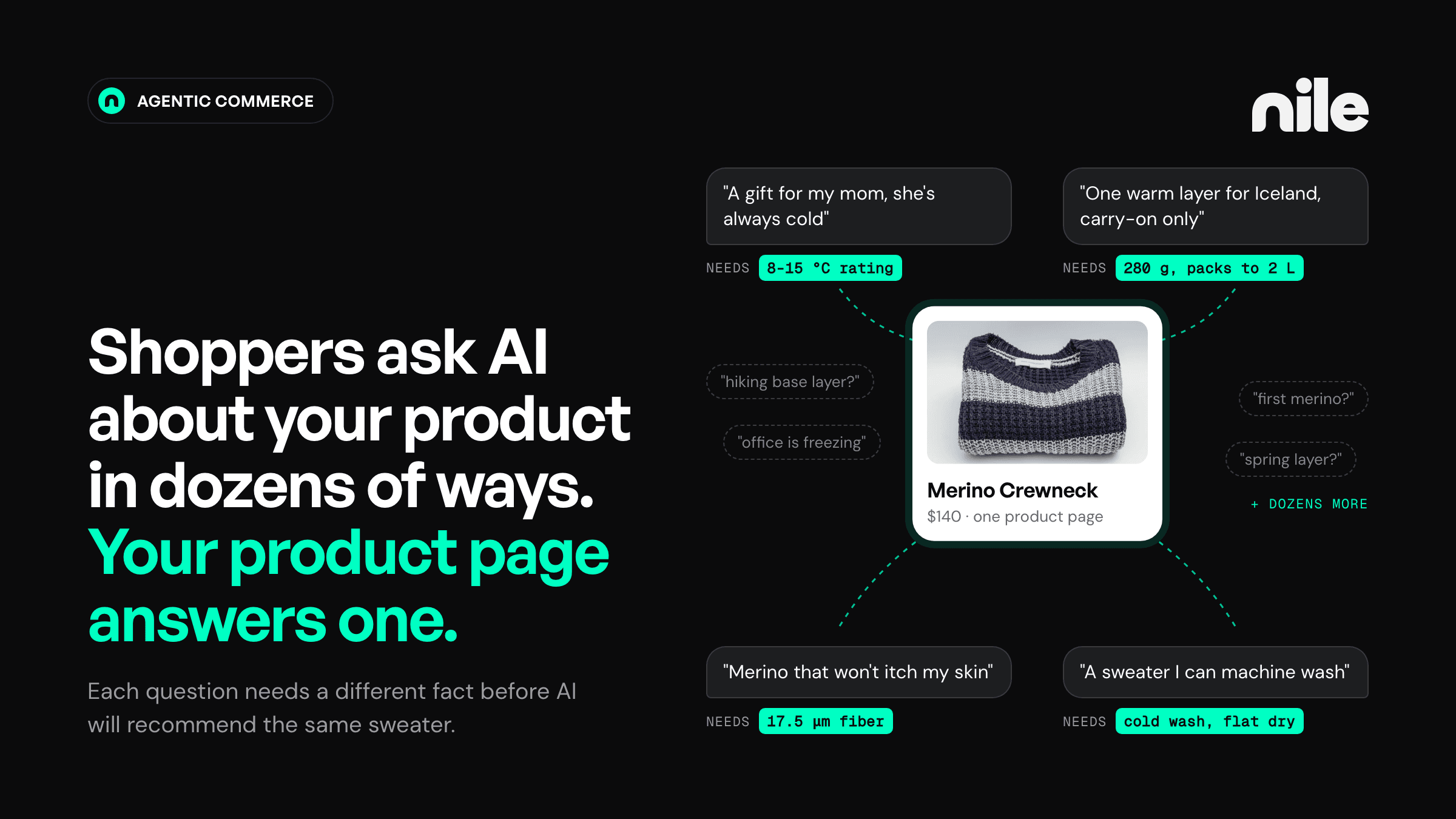
A shopper asks: “Find me a black work tote under $300 that fits a 13-inch laptop and doesn’t look too corporate.” The answer is an interpretation of style, budget, use case, constraints, and tradeoffs, not a keyword match.
That creates a different visibility problem. In search you optimized pages. In paid social, creative and targeting. In marketplaces, listings and reviews. In ChatGPT, your products have to be understandable inside a reasoning process: what it is, who it is for, what problem it solves, how it compares, and whether it is available. The merchant blueprint turns that into a checklist.
Even if checkout moves back to your site, the moment of product selection may happen in ChatGPT.
3. Why OpenAI may not need to own the cart
Owning checkout is powerful, but it brings payment risk, fraud, refunds, disputes, tax issues, and support burden. A platform that owns discovery influences a lot of commerce without absorbing any of that.
By focusing on discovery and merchant-owned checkout, ChatGPT becomes a demand surface while you keep the transaction, the customer relationship, and the post-purchase data.
ACP still matters even as the visible UX shifts: agents, merchants, and platforms need a shared structure to exchange product and order information.
4. The merchant problem
ChatGPT may influence your sales without being easy to manage. You can optimize your website, run ads, upload feeds to Google or Meta. But how do you manage how your products appear in conversational AI? The answer is still forming.
OpenAI’s merchant page says there are no fees on purchases that start in ChatGPT and that product discovery is the priority. You still need to know how products are included, how often information updates, how availability is handled, and how AI-driven sessions are attributed. We tested one slice of this question directly: do ChatGPT ads make you more likely to be recommended?
The harder challenge is comparison: ChatGPT explains why one product suits a request better than another. Visibility is not enough, because agents need context to make the right match.
5. Where Nile fits
OpenAI's direction confirms the shift: for many shoppers, the first product experience is an AI-generated explanation, not your product page. That makes your agent-facing representation a first-class asset.
Nile builds your brand agent: your brand, represented on every AI. You connect your catalog once, Nile turns it into an agent-ready representation of your products, and orders flow through your existing setup. No setup fee, no ad spend: you pay only when you sell.
What to do now:
- Rewrite your top product descriptions for reasoning, not keywords: who it is for, what problem it solves, how it compares.
- Check how ChatGPT currently describes your brand and best sellers. That is your new first impression.
- Keep checkout, availability, and policies machine-readable and current. ACP-style flows depend on it.
- Get your brand represented where attribution is built in. Nile takes a commission only when a real order lands.