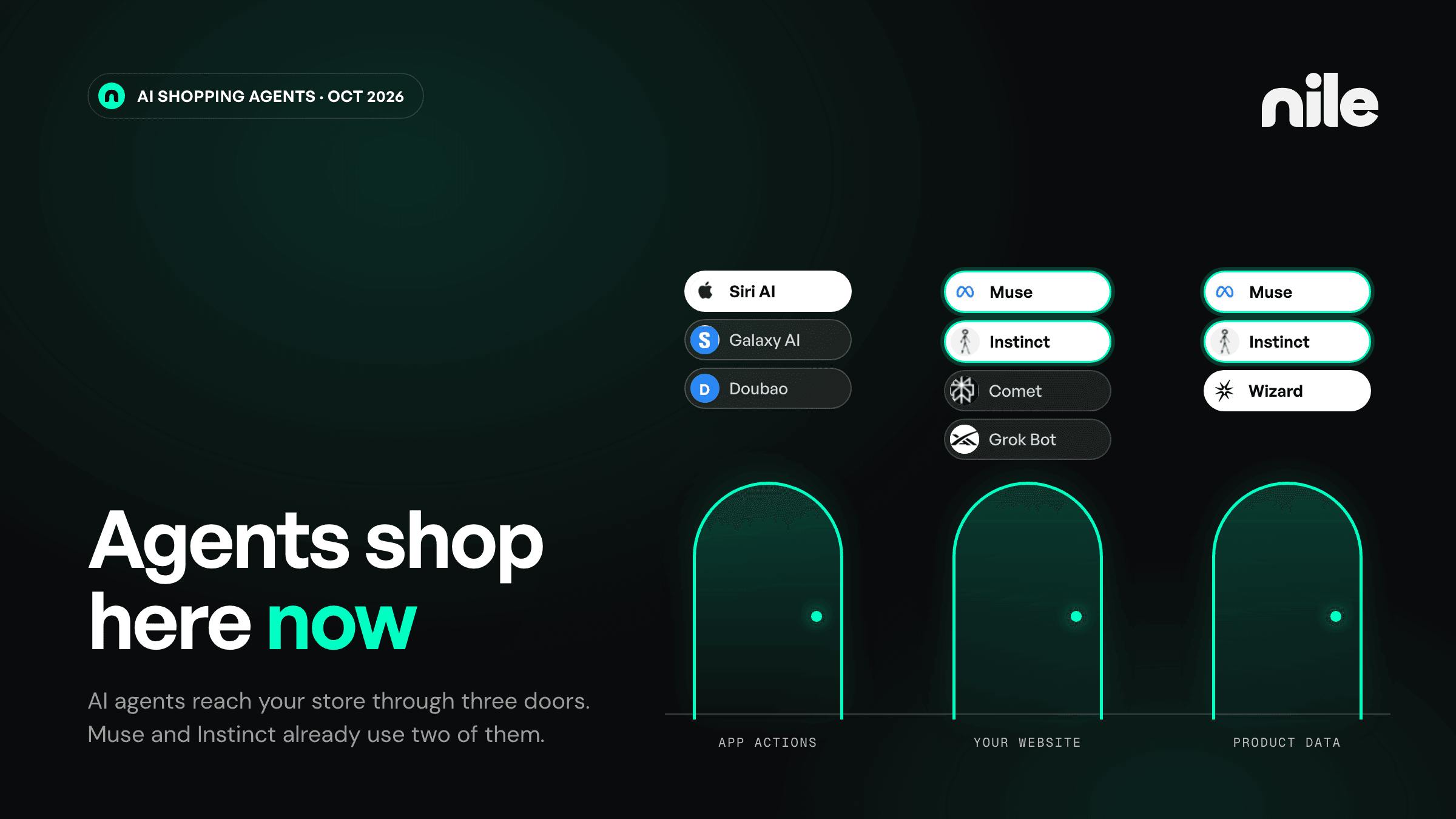

Shopify is not trying to become the shopping agent your customers talk to. It is making sure your products can sell inside every agent that matters: ChatGPT, Google AI Mode, Gemini, Copilot, and whatever comes next.
That move is easy to miss because it is less visually dramatic than ChatGPT checkout or Google AI Mode. It may be one of the most important in the market. Shopify does not need to own the front end of commerce. It needs your inventory to be sellable wherever the front end moves.
1. Shopify as the supply layer
Shopify already powers millions of merchants. It holds product data, inventory, orders, payments, checkout flows, customer relationships, and storefront logic. In the old internet, that infrastructure powered websites and apps. In the agentic internet, Shopify wants it to power AI channels.
Shopify's help center says agentic storefronts let customers discover and purchase products in AI channels including ChatGPT, Google AI Mode and Gemini, Microsoft Copilot, and Meta. Eligible stores have these storefronts active by default.
Shopify also describes how products syndicated through Shopify Catalog are listed with title, description, options, images, price, availability, and other key attributes structured so AI agents can parse and understand them. Shopify says the Catalog continuously updates product data to maintain accurate inventory and pricing across AI channels.
That is not a small feature. It is Shopify positioning itself as a trusted product source for AI agents.
2. The Agentic Plan signal
The more revealing move is the Agentic plan. Shopify describes it as a way for merchants not already using Shopify as their ecommerce platform to add products to Shopify Catalog and sell through agentic storefronts without migrating, on a free subscription where you pay only payment and transaction fees.
Shopify is not only defending its base. It wants Shopify Catalog to work beyond native Shopify stores, a commerce substrate for agentic channels. Even if your main store runs somewhere else, Shopify wants to be what makes your products available to agents.
That is a smart wedge. You probably do not want to replatform. You probably do want access to AI shopping traffic. Shopify’s pitch: keep your core stack, use our catalog and checkout to enter agentic commerce.
3. Why this matters for your brand
You do not want a separate integration for every new AI shopping surface. A serious brand may need to appear in ChatGPT, Google AI Mode, Gemini, Copilot, Perplexity, TikTok, Instagram, Pinterest, and whatever launches next, each with different requirements for product data, eligibility, attribution, checkout, and customer handoff.
Shopify’s promise is abstraction: one catalog, one checkout system, multiple agents. Its developer docs reinforce the direction, with tools for agents to authenticate, search the Catalog, build carts and checkouts, hand off buyers, and monitor orders through UCP.
Less hype, more pipes.
4. The tension
Shopify’s position is strong, but not neutral. If Shopify becomes the agentic commerce supply layer, it gains more influence over how your products are represented, accessed, and transacted across AI surfaces. That simplifies your operations. It also gives Shopify more leverage over your relationship with external channels.
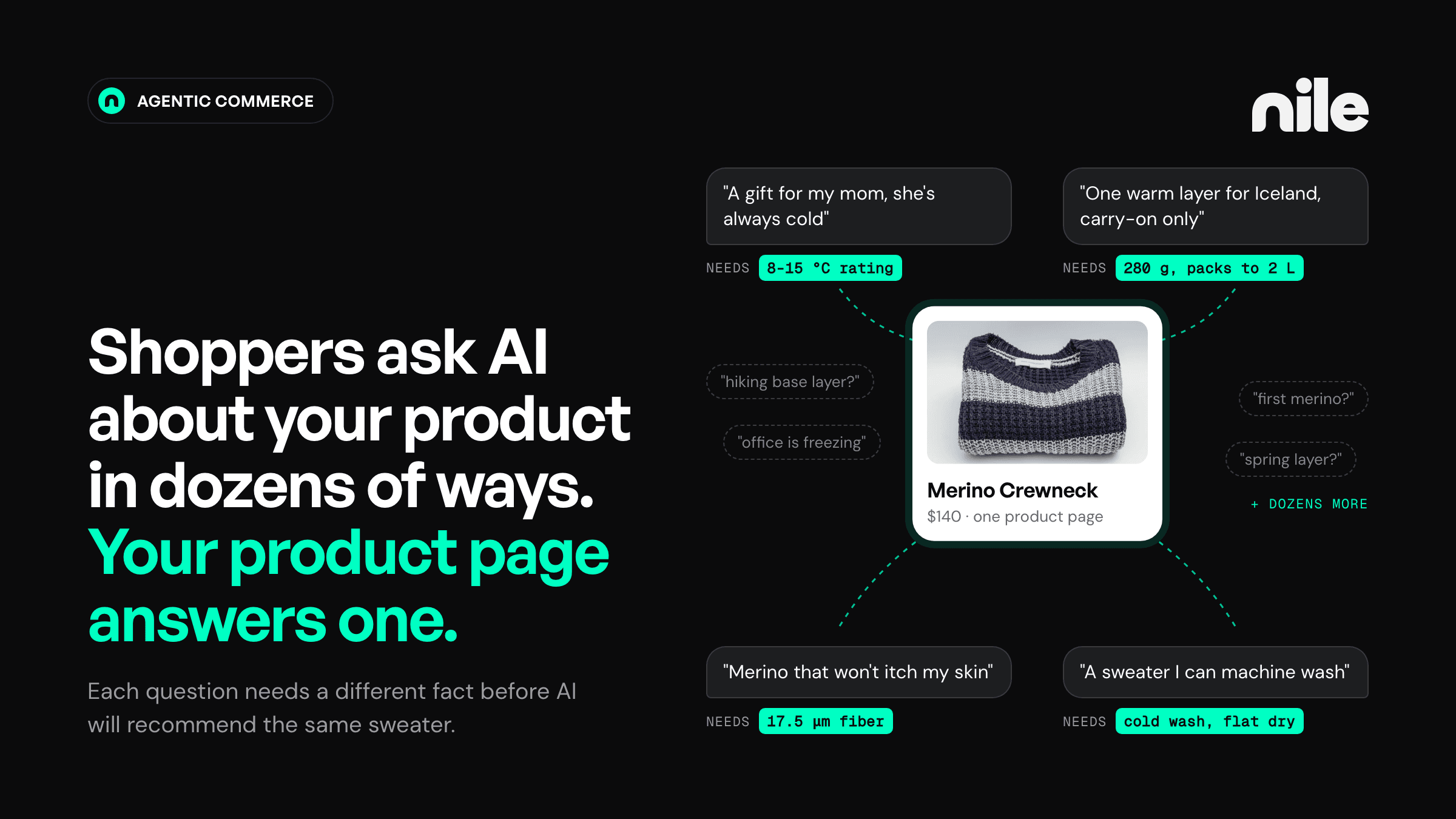
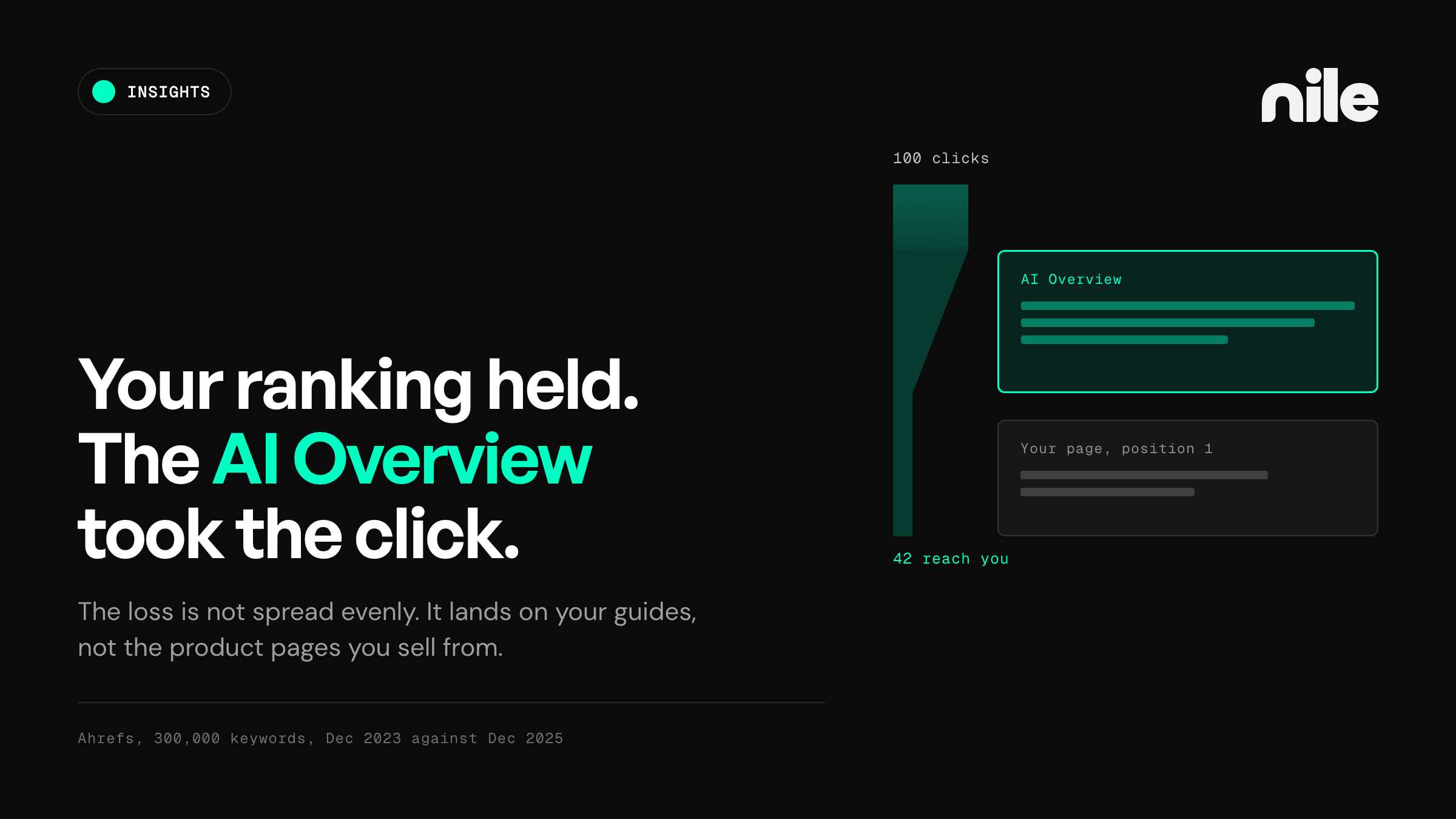
The second tension matters more: catalog readiness is not product competitiveness. Your product can be technically available to an AI agent and still never get recommended. We watched four agents get a simple stock question wrong. Agents select, rank, and explain products: that takes richer context than basic catalog fields, and it takes channels where agent demand actually converts.
That part of the market is still open.
5. Shopify’s likely path
Expect Shopify to keep pushing in three directions: cleaner, more portable product data through Shopify Catalog; easier checkout and cart creation for agents; and a defense of merchant-owned relationships: customers discover through agents but complete transactions through merchant-controlled experiences.
The third point matters because brands are rightly nervous. You want AI shopping traffic. You do not want to become an anonymous supplier inside someone else’s interface. Shopify’s strongest pitch is participation without surrendering the customer relationship.
6. Where Nile fits
Shopify gives you pipes: one catalog, one checkout system, many agents. Nile solves the other half of the problem, which is whether agents actually understand and recommend you once you are reachable.
Nile builds your brand agent: your brand, represented on every AI. You connect your catalog once, Nile turns it into an agent-ready representation of your products, and orders flow through your existing setup. No setup fee, no ad spend: you pay only when you sell.
Shopify makes your catalog agent-readable. Nile makes your brand agent-recommendable.
7. What to do now
- Check whether your store’s agentic storefronts are active and what Shopify Catalog is actually syndicating for each product.
- Audit your product data the way an agent reads it (title, options, images, price, availability), then the context an agent needs to recommend you, not just find you. The merchant blueprint is that audit in full.
- Treat agentic surfaces as channels, not checkboxes: track which ones send orders, not just traffic (why the channel framing matters).
- List where agents already transact. Nile lists selected merchants, and early brands compound.